
Rule of thumb: if your garage door is sluggish or stuck on a cold morning in Fort McCoy, it's almost always moisture-related, not an actual freeze. The exceptions are the handful of nights each winter when a cold front drops temperatures fast right after a humid day or an afternoon downpour — that combination can leave enough condensation on the track and bottom seal to turn into a thin layer of ice by sunrise, especially in shaded spots near tree cover like you get close to Ocala National Forest.
Symptoms to Watch For
Before you start troubleshooting, pay attention to exactly how the door is misbehaving. The symptom usually points straight to the cause.
- Door won't move at all, opener hums or clicks. The motor is trying but something is physically holding the door down.
- Door lifts an inch or two, then stalls. Usually a seal or track issue right at the bottom.
- Door moves but grinds, scrapes, or shudders. Points to the rollers or tracks, not the opener itself.
- Door is slow and heavy-feeling all the way up and down. This spreads the suspicion toward springs or opener gearing rather than a single stuck point.
- Opener runs, belt or chain moves, but the door itself doesn't follow. That's a disconnect between the opener and the door — check the trolley and the cables.
Causes, in the Order a Technician Would Check Them
1. Bottom Seal Stuck to the Slab
This is the first thing to rule out because it's the most common and the easiest to fix. The rubber weather seal along the bottom of the door swells in humid weather, and on a cold, damp morning it can bond lightly to the concrete slab — sometimes with a thin skin of frost, sometimes just suction from dampness. A technician checks this by looking for a visible gap or discoloration where the seal meets the floor. The fix is straightforward: gently break the seal free (never force the opener through it, which stresses the springs), then let the door sit open for a bit so the seal can dry out. If the seal is cracked, flattened, or no longer seated evenly, replacing it solves the problem going forward.
2. Debris or Moisture in the Tracks
Next stop is the tracks themselves. Afternoon downpours followed by a cool night can leave condensation sitting inside the track channel, and over time that moisture invites rust, especially on older steel tracks. A tech runs a hand along the inside of the track feeling for grit, rust flakes, or a sticky film. Cleaning involves wiping the tracks down with a mild degreaser and dry cloth, then checking the track alignment with a level — moisture swelling in wood door jambs can nudge tracks slightly out of true over a season, which makes the sticking worse every time the weather turns.
3. Rollers Stiff or Rusted
Rollers take a beating from humidity even when the rest of the system looks fine. Nylon rollers can get grit packed into the bearings; steel rollers can develop surface rust that makes them bind rather than roll smoothly, especially the first few cycles on a cold morning before things loosen up. The check here is simple — open the door partway by hand and feel for roughness or resistance at each roller. The fix is cleaning and lubricating with a silicone-based garage door lubricant, or replacing rollers outright if they're pitted or chipped, which is common after a few humid seasons.
4. Spring Tension Shifted
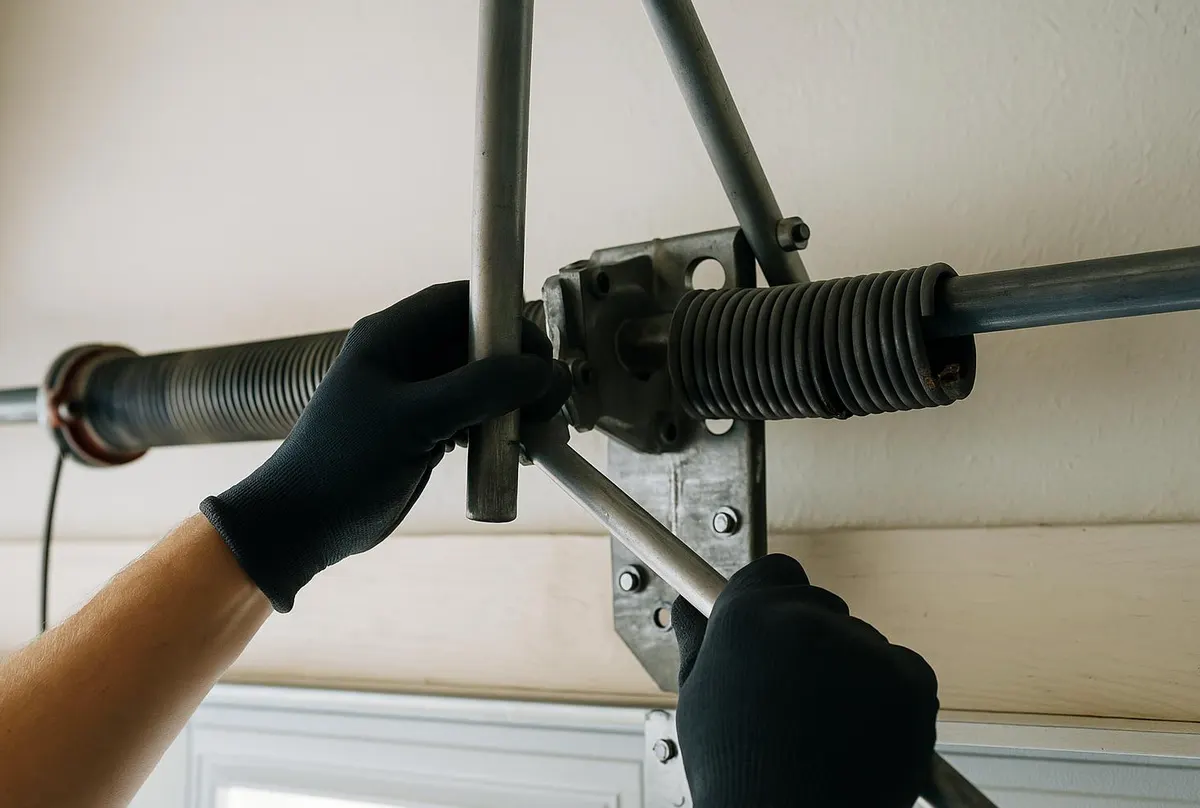
Metal contracts slightly in cold weather, and torsion springs that are already older or slightly under-tensioned can feel noticeably heavier on a cold morning. This is also where age matters — a spring near the end of its lifespan is more brittle in cold conditions and more likely to show stress or even snap on a cold snap morning. A technician checks balance by disconnecting the opener and lifting the door by hand; it should stay roughly in place at waist height. If it drops or shoots up, the spring tension is off and needs adjustment or replacement. This is not a DIY job — torsion springs are under serious tension and are one of the most dangerous parts of the system to work on without the right tools.
5. Opener Gearing and Limit Settings
If the door and track check out, the opener itself is next. Cold can thicken old grease inside the opener's gear housing, making the motor strain even when nothing downstream is actually stuck. A tech listens for grinding inside the unit itself versus at the door, and checks the up/down limit and force settings, which can drift over time and cause the opener to think it's met resistance sooner than it should.
6. Cables Showing Wear
Last on the list, because it's less common as a stand-alone cold-weather cause, but cables that are already fraying or slightly loose from rust can skip or bind when the door is under extra strain from any of the issues above. A visual check along the cable length and at the drum looks for fraying strands or uneven winding. Worn cables get replaced, not patched.
When to Call Fort McCoy Garage Door Experts
If your door is stuck solid, sagging on one side, or the opener is straining hard enough that it sounds like it's fighting the door, stop running it and call us. Forcing a stuck door with the opener is one of the fastest ways to turn a simple seal problem into a snapped cable or a broken spring. We handle Off Track Door Repair and Garage Door Spring Repair regularly throughout Fort McCoy, Ocala, Silver Springs, and the surrounding Ocala National Forest communities, and if your door has been sluggish for more than one cold morning in a row, a Preventive Maintenance & Tune-Up now will catch rust, worn rollers, and drifting spring tension before they turn into an after-hours call.
If your garage door has been dragging its feet lately, give Fort McCoy Garage Door Experts a call — we'll get it moving smoothly again before the next cold front rolls through Fort McCoy, FL.