
The moment you notice it
It usually happens fast. The dog darts under the door just as it's closing. Your kid leans a bike against the track and a pedal gets wedged in the rail. Or you're backing out of the driveway and catch, in the mirror, that the door came down a half-second after you expected it to stop. Nothing happened this time. But your stomach drops anyway, because you realize you don't actually know if that door would have stopped on its own.
That instinct is worth listening to. A garage door is one of the heaviest moving objects in most homes, and the systems that keep it safe around children and pets are mechanical parts that wear out quietly, with no obvious symptom until the day they don't work.
What actually goes wrong
Three systems do the safety work on a modern garage door, and each one fails in its own way:
- Auto-reverse sensors. The two small photo-eyes near the bottom of the track are supposed to stop the door the instant something breaks the beam. They get knocked out of alignment by a stray basketball, a bike handlebar, or just years of garage dust and humidity fogging the lenses. A misaligned sensor can look fine and still fail to react in time.
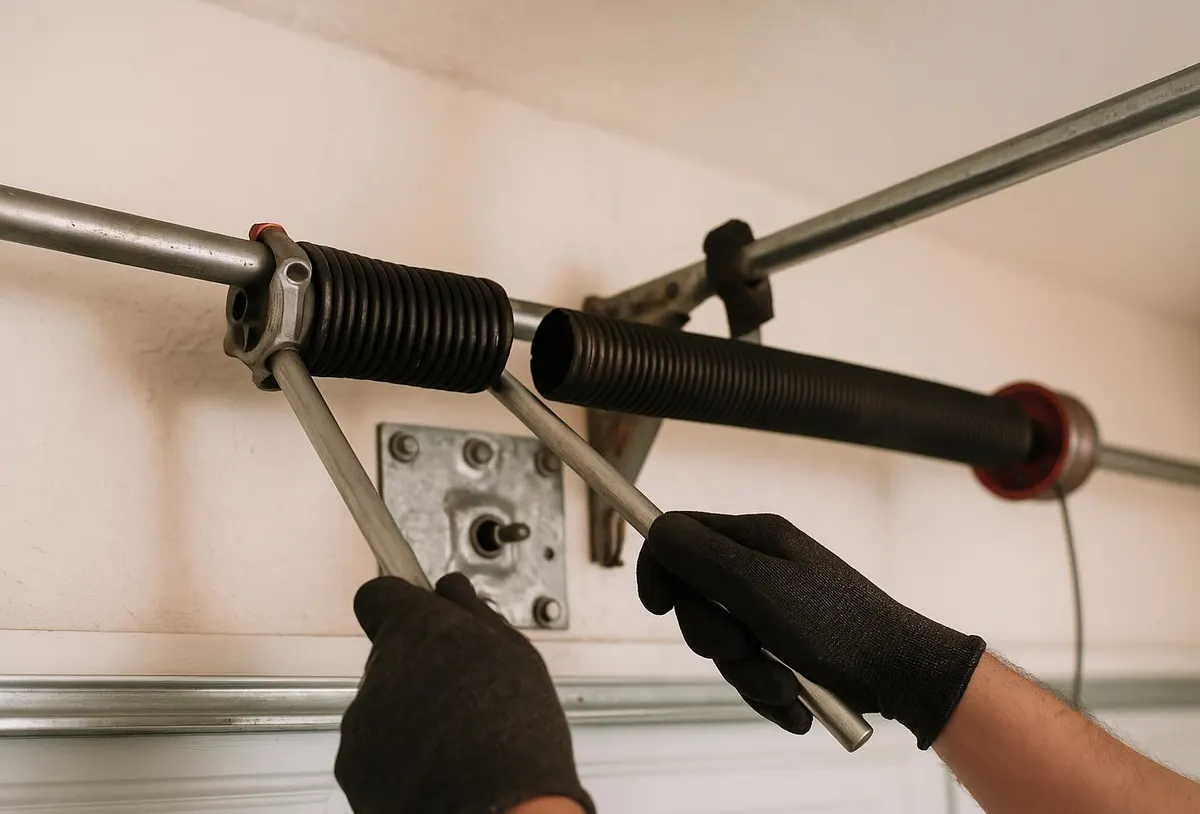
- Torsion and extension springs. These carry almost the full weight of the door. When one weakens or snaps, the door can drop suddenly, unevenly, or slam down with far more force than it should. In Florida's heat and humidity, springs corrode faster than they would in a drier climate, and a corroded coil is more likely to fail without warning.
- Tracks and rollers. A door that's slightly off its track doesn't always jam — sometimes it keeps moving but unevenly, which is exactly the kind of unpredictable motion that catches a hand, a tail, or a leash.
How badly it can go wrong
The injuries that come from these failures aren't hypothetical: crushed fingers and hands from pinch points between panels, more serious injuries when a door closes on a child or pet that didn't clear the opening in time, and head or body injuries from a door that drops because a spring let go. The pinch points between panel sections are especially easy to miss, because they're at exactly the height curious hands and paws tend to explore.
The specific things that prevent it
- Test the auto-reverse monthly. Place a paper towel roll or a toy in the door's path and close it. The door should reverse the instant it touches the object. If it doesn't, stop using the opener until the sensors are realigned.
- Keep the photo-eye lenses clean and aligned. Wipe them with a soft cloth and check that both lights glow steady, not blinking — a blinking light usually means misalignment.
- Never let kids or pets play near a moving door or treat the remote as a toy. Mount wall controls high enough that small children can't reach them.
- Check for pinch points. Run a hand along the panel edges (door closed) and note any gaps that could catch fingers. Pinch-resistant panel designs exist and are worth asking about at replacement time.
- Listen for changes in sound or speed. A door that suddenly moves faster, slower, or louder than usual is often telling you a spring or cable is under more or less tension than it should be — don't wait for it to fail completely.
- Watch for rust on springs and hardware, especially after a stretch of heavy rain or humidity. Rust weakens metal from the inside before it's visible as a problem on the surface.
Why this matters more going into hurricane season
Wind-load-rated doors and their reinforcement hardware are built to resist pressure, but that same hardware gets a workout during storm season's wind and driving rain. Afternoon downpours and salt-tinged air push moisture into tracks, springs, and sensor housings, accelerating the corrosion that leads to sudden failures. A door that's handled one storm season fine can still have hardware that's quietly weakening. A pre-season check isn't just about storm prep — it's a safety check for the people and pets who use that door every day.
When to call Fort McCoy Garage Door Experts
If your auto-reverse test fails, if you spot rust or fraying on a spring or cable, or if the door has ever come down faster or harder than normal, stop using it and call. We handle Garage Door Spring Repair and Garage Door Cable Repair for doors that are showing wear from Florida's heat and humidity, and our Preventive Maintenance & Tune-Ups cover a full safety check — sensor alignment, spring tension, roller and track condition — so you're not guessing whether the door protecting your family is actually doing its job.
If you're in Fort McCoy, Ocala, Silver Springs, Salt Springs, Eureka, Citra, Orange Springs, or Lynne and you've had a close call in the garage, don't wait for a second one. Call Fort McCoy Garage Door Experts for a safety check today.